



shape
Innovation

See Yourself Inside: A bag of Lay’s

Swirl pattern

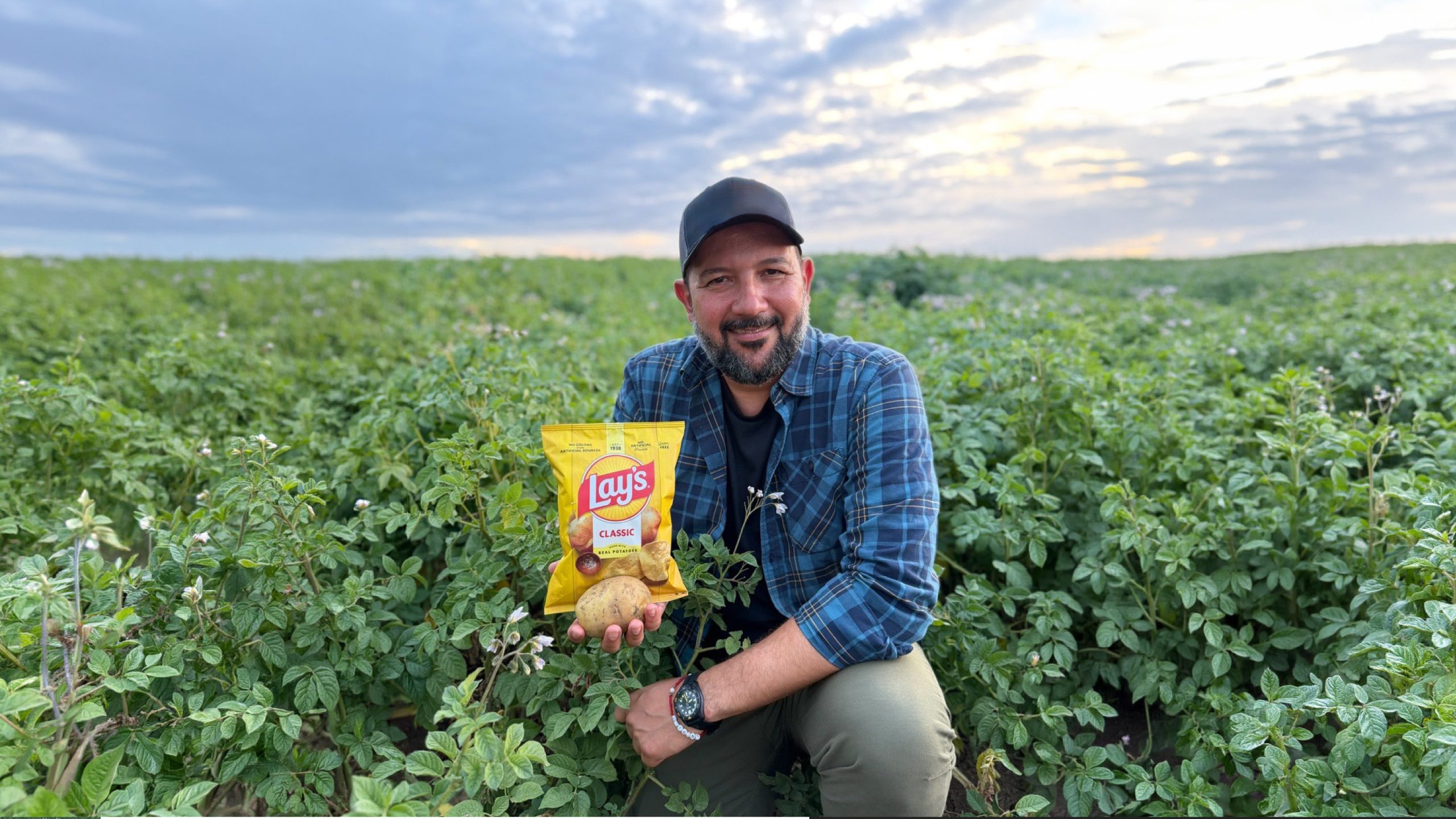
Every bag of Lay's starts with a potato. What follows is a story of the people, the partnerships, and the expertise required to bring that potato from the field to consumers around the world.

For nearly a century, Lay’s has brought together real potatoes and real experiences. Every chip begins with real potatoes, cultivated with care by farmers who understand the land and the harvest. That connection to agriculture is at the heart of Lay’s story: quality, authenticity, joy, and the people who make it possible.

Quick history lesson on Lay’s: the brand was created in 1938 by a traveling salesman named Herman W. Lay. He crisscrossed the United States selling Lay’s out of the trunk of his car and, in the 1940s, ran the first national television ads for a potato chip.

Today, Lay’s is sold in nearly 200 countries around the globe. The brand that started in the back of a car is one of the most loved chip brands in the world — but it still takes Herman W. Lay levels of ingenuity from a whole lot of people to make, move and sell each bag. Here are just a few of them.

From farm to bag

Procuring the potatoes

The journey starts with the people who secure the ingredient that defines Lay’s: potatoes.

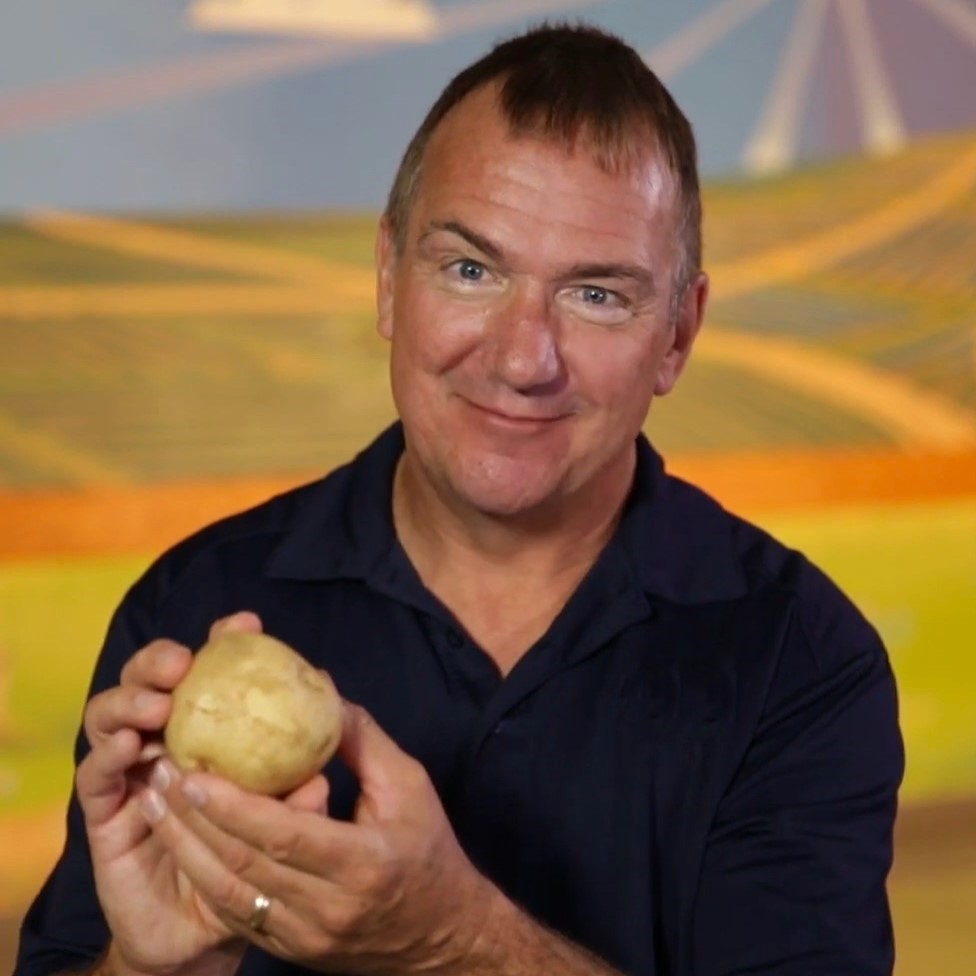
“Everything’s direct grower,” says Fabrizzio Cantagallo, Director of Procurement for PepsiCo Foods North America. “We know where each potato comes from. We know the farm, we know the field.”

That connection matters at scale. Each year, teams work across more than 65 growers and suppliers, covering over 150 farm locations across the United States and Canada—many of them multi-generational farms that have partnered with PepsiCo for decades.

To make all of that work, Cantagallo’s team is constantly managing a moving system. They balance growing seasons, regional supply, demand signals, and quality requirements—decisions that determine how roughly 4 billion pounds of potatoes move through the network every year.

And it’s not just about knowing potatoes. For people in this part of the business, the work is part agriculture, part supply chain, and part commercial strategy. “Curiosity is key,” he adds.

We look for people who ask questions, keep learning, and want to understand how everything connects.

Because there are variables the team can control—and many they can’t. Weather, demand signals, and supply chain conditions are always shifting, and the work is about adjusting in real time.

“Most of what we do every week is figure out what the best supply looks like for our production sites,” he explains. “Every week is a new puzzle.”

And through all of it, one thing stays constant: quality. The goal is to deliver potatoes that meet precise standards: size, color, consistency, so they perform the same way in production no matter where they’re grown.

“When you think about it, we’re not sourcing one potato—we’re sourcing 12 billion of them,” Cantagallo says. “So the question is always: how do we keep the quality consistent at that scale?”

1 / 0
1 / 10

Every year, procurement experts at PepsiCo secure 4 billion pounds of potatoes from around 150 different farms in the U.S. and Canada.

2 / 10

Supply chain and logistics managers then move the potatoes by trucks or refrigerated train cars depending on seasons and routes. The longest route is from North Dakota to a plant in Georgia.

3 / 10

During peak harvest periods, about 40% of potatoes go directly from field to production facilities, while the remaining 60% are harvested then stored by farmers in specially designed barns.

4 / 10

Through innovations from PepsiCo engineers and crowdsourced suggestions from actual production workers, it only takes about 20 minutes for a potato to come off a truck, be cleaned, sliced, cooked and seasoned, and packaged.

5 / 10

The ideal shape of a chip is a “saddle,” rounded with a bit of a curve. “Folded” chips occur when a potato slice is too thin and folds over when it hits the oil.

6 / 10

But consumers like folded chips so much, production supervisors allow for them.

7 / 10

To make sure the flavor blend is evenly distributed, the chips tumble inside a large rocket-shaped barrel, rotating and shaking as the spices are gently dusted across each chip.

8 / 10

Lay’s uses quality ingredients. For procurement managers, some are harder to secure than others. One example is aged cheddar, which has to be sourced years in advance.

9 / 10

Once per shift, three production employees act as taste testers to quality control the chips coming off the line.

10 / 10

CAREER INSIGHT: Sustainable Agriculture

Sustainable agriculture teams support growers and strengthen the long-term resilience of the farming systems behind Lay’s. Ceejay Girard, Director of Innovation and Partnerships in PepsiCo’s Sustainability Agriculture team, works directly with farmers to introduce new technologies and sustainable practices that help protect the land while maintaining productivity. These include approaches like no-till farming, cover crops, and drip irrigation, which improves water use and supports yields. “It’s a game-changer for productivity,” Girard says, “but access to this technology can still be a challenge in many regions. Regenerative agriculture supports the land, the farmer, and the natural resources they depend on,” she explains. “Transforming one farm can spread across a community—shaping how farmers work and how people think about the food they eat.”

Moving the potatoes

Once potatoes are sourced, the next challenge is getting them where they need to be—quickly and in the right condition. Teams coordinate transportation based on growing seasons, routes, and production needs. The goal is to keep everything moving efficiently between farms and production sites so quality stays consistent along the way.

“You need the supply chain to move fast and smoothly from farms to production sites,” Cantagallo explains.

Most potatoes move by truck, with teams prioritizing routes that keep supply close to production whenever possible. In some cases, potatoes are sourced locally during harvest season. In others, they are transported from different regions or pulled from storage depending on the time of year.

Sometimes you use local supply, sometimes you move potatoes from farther away. But you’re always balancing quality, timing, and cost.

Making the chips

When potatoes arrive at our production sites, operations teams take over—keeping lines moving, managing materials, and maintaining quality. Stephen Chahanovich, Production Planner at the Killingly, Connecticut site, helps ensure a steady flow of potatoes to keep production running. His site processes 18 truckloads a day, sometimes rising to 24 during peak demand. From truck to bag, the process takes about 20 minutes. Potatoes are peeled, sliced, fried, and then tumbled in a rotating barrel to evenly coat each chip.

“We can make 14,000 pounds of chips every hour,” Chahanovich says.

Quality checks are built into the process. Each shift, team members compare chips against a “golden bag” to ensure consistency.

Some of the biggest operational improvements come from the floor. When smaller snack bags caused shutdowns due to chip size, the solution wasn’t in the plant—it was upstream. The solution was smaller potatoes, and Chahanovich met personally with growers to address it. “And they started planting the potatoes closer together, so they grow smaller,” he says.

CAREER INSIGHT: Operations Management

Operations teams keep production running—ensuring materials are ready, processes stay on track, and chip quality is consistent at scale. At the Killingly site, Stephen Chahanovich helps manage the daily flow of potatoes needed to keep lines moving. The work is hands-on and fast-paced, often requiring real-time adjustments and coordination across teams. It’s also where practical solutions emerge to keep up with changing demand. “I always tell the new hires, ‘Get good at your job, and if there’s something that interests you, say something.’ There’s so many opportunities — that’s the greatest part of working here.”

Creating all those flavors

Once the chip is right, flavor teams build on that base—combining deep technical expertise with consumer understanding. “Lay’s are probably the perfect base for flavor development because it’s a beautiful palette,” says Ann Robarge, Senior Principal Scientist, who has spent her career in R&D product development.

Over the past several years, Lay’s has continued to evolve how flavors are created—placing quality ingredients and food culture at the center of the process. Today, teams draw inspiration from cuisines and traditions around the world, then test and refine ideas until they’re ready for consumers.

And consumer feedback is the final filter. Once the team narrows ideas down to a few versions, they ask consumers to try them: “Consumers have one job, and it’s to tell us if they like it or if they don’t. And it’s my job to be able to understand why they liked it or didn’t,” Robarge says.

CAREER INSIGHT: Flavor Development

Flavor development blends creative thinking with technical expertise to turn ingredients into food people recognize and enjoy. Ann Robarge works on developing and refining flavors, drawing inspiration from food culture and consumer behavior. The process is iterative—teams test variations, gather feedback, and refine based on what resonates with consumers across markets. “I led the work to make a chip taste like a cappuccino. Now, just because I can do it doesn’t mean consumers think I should do it, but I did it.”

By the time a Lay’s chip makes it into a bag, the work spans farms, logistics, production, and product development—each step carefully managed to ensure quality and consistency.

But that’s only part of the story.

Shaping the brand

For the people working on Lay’s, the brand isn’t something static—it’s something they’re constantly refining through a series of decisions about how it should look, feel, and show up across the world.

That work starts with the chip itself. Designers and marketers look closely at what defines Lay’s—real potatoes and quality ingredients—and translate that into how the brand is expressed visually and experientially. Every detail, from packaging to in-store presence, is shaped to reflect that connection back to the ingredients.

The new visual identity celebrates the humble, farm-grown potato—where every Lay’s potato chip starts—and highlights the ingredients behind the flavor consumers love.

Alexis Porter, Vice President of Marketing, Global Lay’s

The refreshed Lay’s logo shines brighter, inspired by the sun that nurtures the potatoes, and is wrapped in the signature red ribbon — a mark of quality and care. Surrounding it are Lay’s rays, a dynamic design element that brings warmth and energy across packaging, retail, and beyond.

But bringing that to life is not a linear process. It requires close collaboration across design, marketing, insights, and communications teams. Ideas are tested, challenged, and refined continuously—often across multiple markets at once. Designers explore how visual elements connect back to the chip. Insights teams evaluate how consumers respond. Marketing teams translate those inputs into packaging and campaigns that ultimately reach the shelf.

Throughout that process, teams are constantly making judgment calls—deciding what to update, what to simplify, and what must stay exactly the same.

That balance becomes even more important at a global scale. Lay’s needs to feel familiar whether it appears in the U.S., China, or another market entirely. As Denise Truelove, Senior Vice President of Marketing, explains, those decisions are shaped by what consumers already expect from the brand:

Delighting our consumers goes beyond bold flavors—it’s about delivering trusted quality from farm to bag.

At the same time, every change has implications beyond design and marketing. Even small updates to packaging or identity must be evaluated across regions, languages, and legal frameworks.

That’s where trademark teams play a critical role. Jeanette Zimmer, Legal Senior Director, works with a global network to protect Lay’s brand assets and ensure they remain consistent across nearly 200 countries. Her work involves monitoring potential conflicts, advising on how far changes can go, and making sure the brand remains recognizable wherever it appears.

“Our global trademark team safeguards these brand assets—our ‘crown jewels,’” Zimmer says.

For the teams behind the brand, the work is ongoing. It’s not about launching something new—it’s about continuously evolving something people already know, while ensuring it stays recognizable, relevant, and consistent across every market.

CAREER INSIGHT: Brand & Marketing

Sonam Bikram Vij, Senior Marketing Manager, works on shaping how Lay’s connects with consumers across campaigns, platforms, and markets. Her work involves translating consumer insights into ideas—developing and testing concepts, then adapting them to different audiences while keeping the brand consistent. The role requires balancing global strategy with local relevance, making decisions about how the brand shows up in different contexts while staying recognizable. It’s a mix of creative development and analytical thinking, grounded in how people actually enjoy the product in their everyday moments. “At PepsiCo, I’ve had the opportunity to help shape one of the world’s most iconic brands. Lay’s is more than a snack — it’s a shared experience that brings people together. Seeing our work resonate with people around the world reminds me why storytelling and purpose matter in everything we do.”

Where Lay’s lives

As consumer habits evolve, teams are increasingly focused on how Lay’s shows up in everyday moments, from events to on‑the‑go environments and new formats built around food experiences. That shift has opened up new ways for people to interact with the brand, not just as a snack, but as part of shared moments.

One example is the Lay’s potato‑themed restaurant in Shanghai, where the brand is brought to life through a full culinary experience. The concept blends product, design, and culture—transforming familiar ingredients into dishes, environments, and moments designed to be experienced and shared.

This kind of work reflects a broader shift in how the brand connects with consumers. As Nina Mu, Chief Marketing Officer, Greater China Foods, explains:

We’re connecting our brands to the food experiences consumers are increasingly seeking—creating new ways to enjoy Lay’s beyond traditional snacking and helping unlock new occasions in the away‑from‑home channel.

CAREER INSIGHT: Culinary Innovation

Some of the most exciting work on Lay’s happens in a kitchen, not an office. At PepsiCo’s culinary hub in Barcelona, chefs and product developers rethink classic potato dishes for the way people eat today — reworking a tortilla to achieve a lighter texture, refining a croquette for a balanced bite, turning a loaded potato into a complete meal. Christian Saclier, Chief Innovation Officer for PepsiCo Food Ventures, sets the bar: “Every dish has to earn its place through taste, structure, and craft.” It’s a way of working that feels closer to a restaurant than a corporation — fast, hands-on, collaborative. Ideas are cooked, tasted, adjusted, and often taken apart and rebuilt. The dishes that succeed travel beyond the kitchen into real Away-from-Home settings — pop-ups and restaurant concepts like Pilla Tortilla in Spain — where people decide whether something is worth coming back for. For chefs, food developers, and culinary-minded marketers, it’s a chance to help build the future of how the world eats Lay’s.

Bringing ideas like this to life requires teams to think differently about how the food fits into people’s lives—working across marketing, innovation, and partnerships to translate emerging consumer behaviors into experiences that feel relevant in specific markets.

That same mindset shapes how Lay’s shows up globally. Flavor plays an important role in how people connect with the brand, with variations across regions reflecting local tastes, traditions, and preferences. Whether rooted in familiar favorites or inspired by regional cuisine, those differences are intentionally developed to align with how people actually eat and share food.

Across all of these moments—whether through a new format, a local flavor, or a shared occasion—the goal is consistent: to meet people where they are and make Lay’s feel like part of those experiences.

CAREER INSIGHT: Frontline Sales

Frontline sales teams play a vital role in bringing Lay’s to people around the world. Often closest to consumers and communities, these teams help ensure the brand is present in everyday moments where food is shared and enjoyed—inside and outside the home. The work goes beyond execution. For many on the frontline, it’s about supporting experiences that matter to people and representing a brand they believe in. As Jon Roth, Integration Lead for PepsiCo Food North America reflects, “One of my most meaningful memories with Lay’s comes from moments when people are getting ready to share food with others—when you see their excitement and know they’re bringing that experience to friends or family. It makes you feel good knowing you’re providing a little joy in people’s lives.” This sense of pride and purpose is what drives frontline teams as they help translate a global brand into meaningful, local moments every day.

A Bag of Lay’s, Made by Thousands

For Fabrizzio Cantagallo, what stands out most about Lay’s isn’t just the potato itself—it’s the people behind it.

One thing you see across this work is the passion people bring to it – whether it’s our teams or our partners. That’s really what drives everything we do.

That passion shows up at every stage. It lives in the growers and suppliers who help bring our products to life on farms around the world. It lives in the procurement teams, solving a new supply puzzle every week. It shows up in the operators and engineers keeping production moving, in the scientists refining flavors, and in the marketers, lawyers, and commercial teams helping bring Lay’s to people around the world.

Every chip is the result of thousands of decisions made by thousands of people – all helping turn a potato into one of the world’s most recognizable brands.

See yourself inside a bag of Lay’s.

Curious about what a career at PepsiCo could look like for you? Explore open roles and discover how you can make an impact.